 FR
FR  ZH
ZH  EN
EN  AR
AR  RU
RU  PT
PT  ES
ES  DE
DE  FI
FI  IT
IT  KO
KO  VI
VI  TH
TH  MS
MS  MN
MN  JA
JA HC Industry / Retail LED Display Application
A retail LED display earns its place when it meets the shopper at the right moment: before they enter, while they compare, when they wait, and when they are close enough to act.
Article focus: this is not a generic LED display definition. It looks at where retail screens create value along the shopper journey: storefront attention, product-level explanation, counter promotion, queue communication and brand atmosphere.
Retail path snapshot
Attract at the window. Guide near the entrance. Explain beside the product. Promote at the counter. Reassure while people wait. A display without a job becomes decoration; a display placed at the decision point becomes part of the sale.
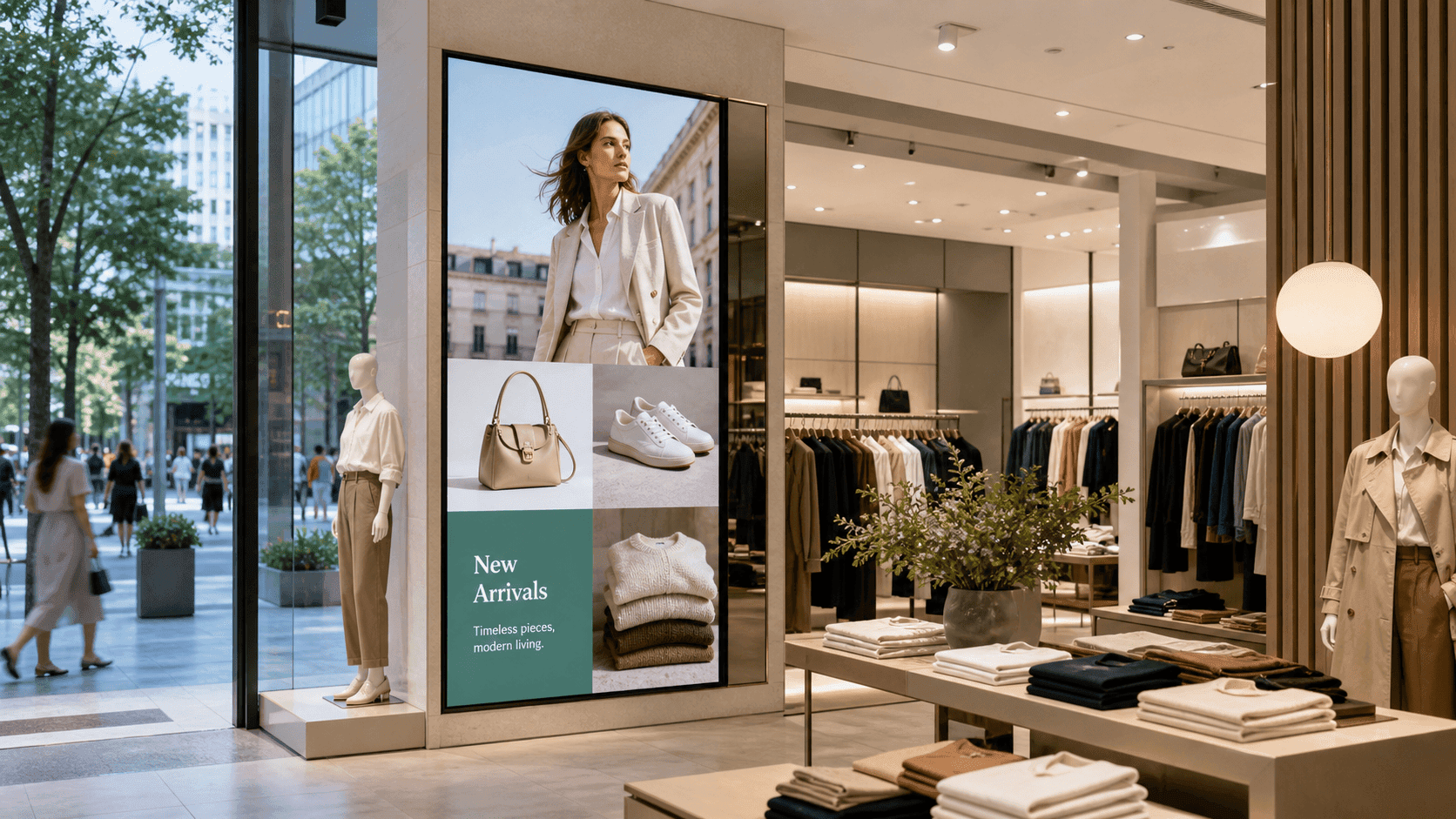
A storefront or entrance display should draw people toward the store while still feeling like part of the retail interior.
The screen only works when it has a job
A bright screen can catch the eye, but attention is only the first step. In retail, the stronger question is what the screen helps the shopper do next. Does it pull someone toward the entrance? Does it explain a product without making staff repeat the same sentence all day? Does it make a counter promotion impossible to miss? Does it turn waiting time into useful brand time?
That is why a retail LED display should be planned by location and purpose before size or specification becomes the main conversation. The same LED display screen can feel powerful in one position and pointless in another. The difference is not only brightness or pixel pitch. It is whether the content meets the shopper at the moment they are ready to look.
Entry screens attract. Decision-point screens convert.
A storefront LED display has one kind of pressure: it must be visible from outside the store, readable at a glance and calm enough not to fight the window design. It can announce a campaign, show moving product visuals or make a quiet brand facade feel more alive. But the window is still only the invitation.
The real retail work often happens deeper inside. A screen beside a product category can compare benefits. A small display near a counter can loop limited offers. An indoor LED display near a service point can show pickup information, membership prompts or seasonal messages. These screens do not need to shout. They need to arrive at the right height, the right distance and the right decision moment.
Planning note: a retail screen should not repeat the same campaign everywhere. Window content can attract. Product-zone content can explain. Counter content can push action. Queue content can make waiting feel shorter and more useful.
Product-level displays speak closer to the shelf
Retail decisions are often small and physical. A customer picks up one product, compares it with another, checks the price, looks at the packaging, then looks for a reason to believe. A screen near the shelf or counter can support that moment with product visuals, ingredient highlights, menu items, limited-time offers or simple usage ideas.
This is where the display should feel close to the merchandise, not pasted onto the store as a separate advertising layer. For countertop digital signage, compact LED display directions can make sense when the screen needs to sit near products, checkout counters, reception desks or exhibition tables. For larger brand spaces, LED wall panels or indoor LED display surfaces may carry broader visual stories.
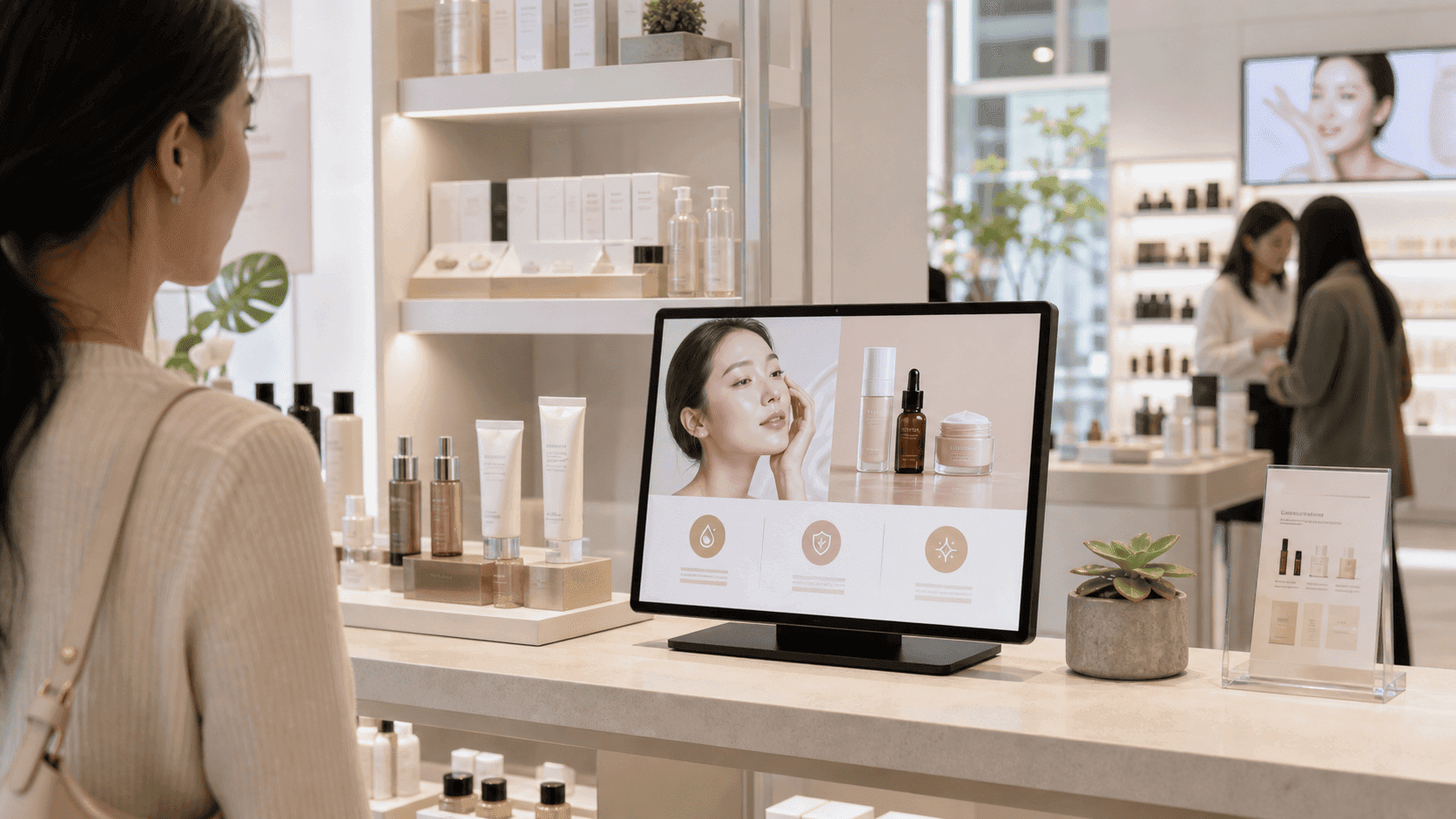
Close to the product, the screen can support comparison, product storytelling and counter-level promotion without needing to dominate the whole store.
Queue areas need clarity, not noise
The line is one of the most overlooked retail media positions. People are already still. They are already looking around. They may be thinking about an add-on purchase, a membership, a pickup number or the next service step. A screen in this zone should not become a loud wall of motion. It should make the wait feel organized.
A clear retail LED display can show pickup status, menu loops, product bundles, service reminders or simple wayfinding. The content should be readable from the actual standing distance. The screen should support the store staff rather than compete with them. In this role, good digital signage feels less like an ad and more like a calm assistant.
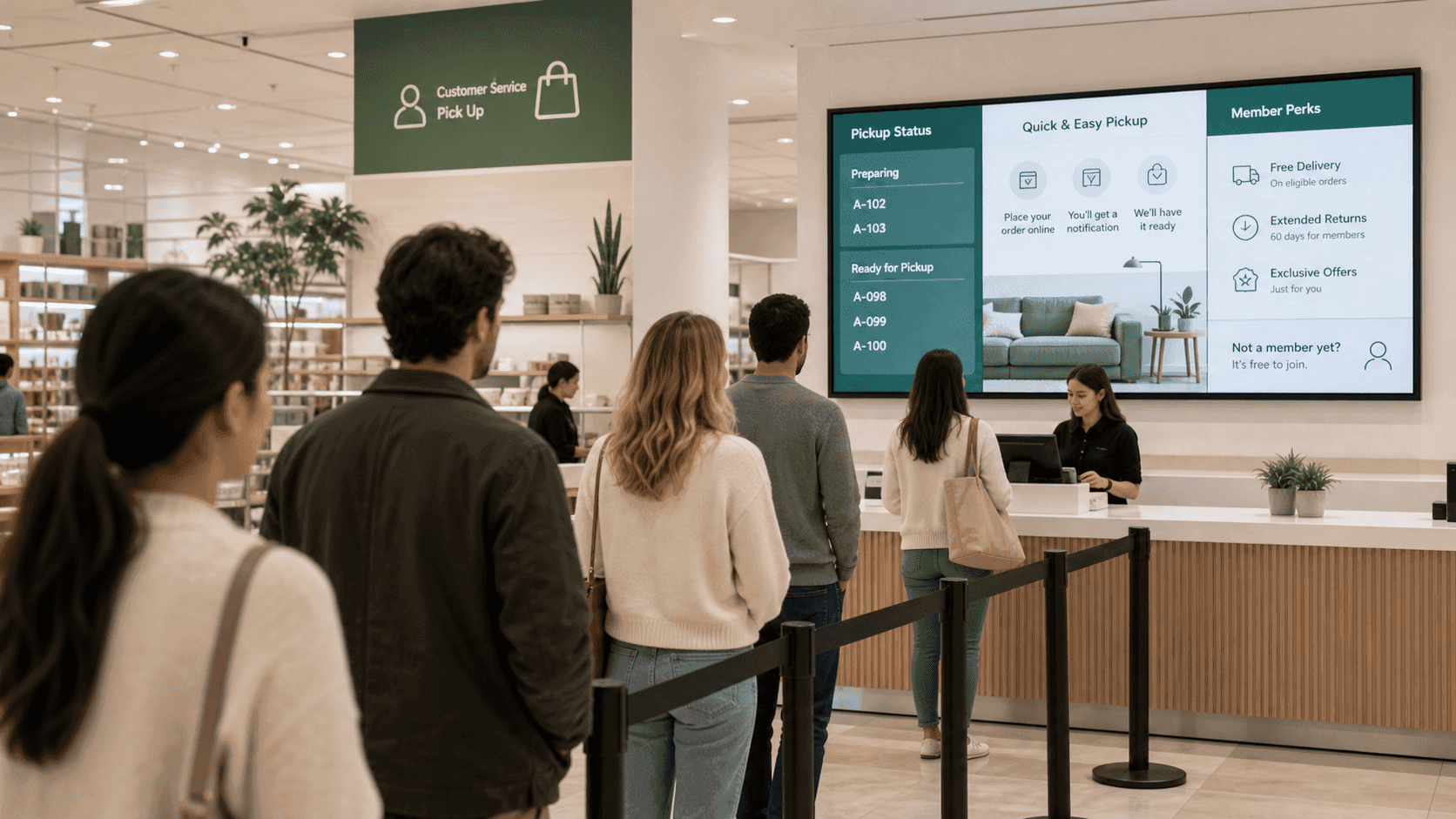
In queue and pickup areas, the best screen content is useful first: status, service steps, add-on prompts and simple reassurance.
The best retail screen is not always the biggest one. It is the one placed where the shopper’s attention, question and next action meet.
What to plan before choosing the display direction
Before a store decides on a display direction, the location should be described in plain language. Is the screen facing the street, the aisle, the product table, the counter or the queue? Will people see it from three meters away or from across the mall corridor? Does the screen need to show product imagery, price-like information, menu content, campaign video or wayfinding?
Once the role is clear, it becomes easier to discuss the right product family: an indoor LED display for brand walls, LED panels for a seamless visual surface, a desktop LED display for counter-level content, or another commercial LED display direction for the store environment. The goal is not to force every retail need into one screen type. The goal is to make the display match the moment.
Useful retail questions
Where does the shopper stop? What question do they have there? What content would help them decide? How far away will they read it? Does the screen need to blend into the interior, stand out from the window, or sit close to the product?
Where HC fits
HC Industry’s LED display direction is useful for retail teams that want screens to do more than fill empty space. A retail project may need an indoor LED wall panel for a brand zone, a commercial LED display for storefront visibility, a compact display for counter communication, or LED display panels for a cleaner visual surface.
The strongest starting point is the shopping path. When the store knows where attention turns into a decision, HC can help match the display direction to the scene, content style and viewing distance instead of treating every screen as the same advertising surface.
Talk to HC Industry about your retail display position. Share the store area, viewing distance, content type and screen role, and the LED display direction can be planned around the shopper’s actual decision point.