 TH
TH  ZH
ZH  EN
EN  AR
AR  RU
RU  PT
PT  ES
ES  DE
DE  FR
FR  FI
FI  IT
IT  KO
KO  VI
VI  MS
MS  MN
MN  JA
JA HC Industry retail display ideas
The Store Window After Dark: How LED Displays Keep Retail Visible Beyond Business Hours
A shop window changes after sunset. The glass becomes darker, the street becomes quieter, and every lit surface starts to work harder. A well-planned LED display does not simply make the window brighter. It gives the store a second shift: one that speaks to people walking past, waiting outside, or deciding whether to come back tomorrow.
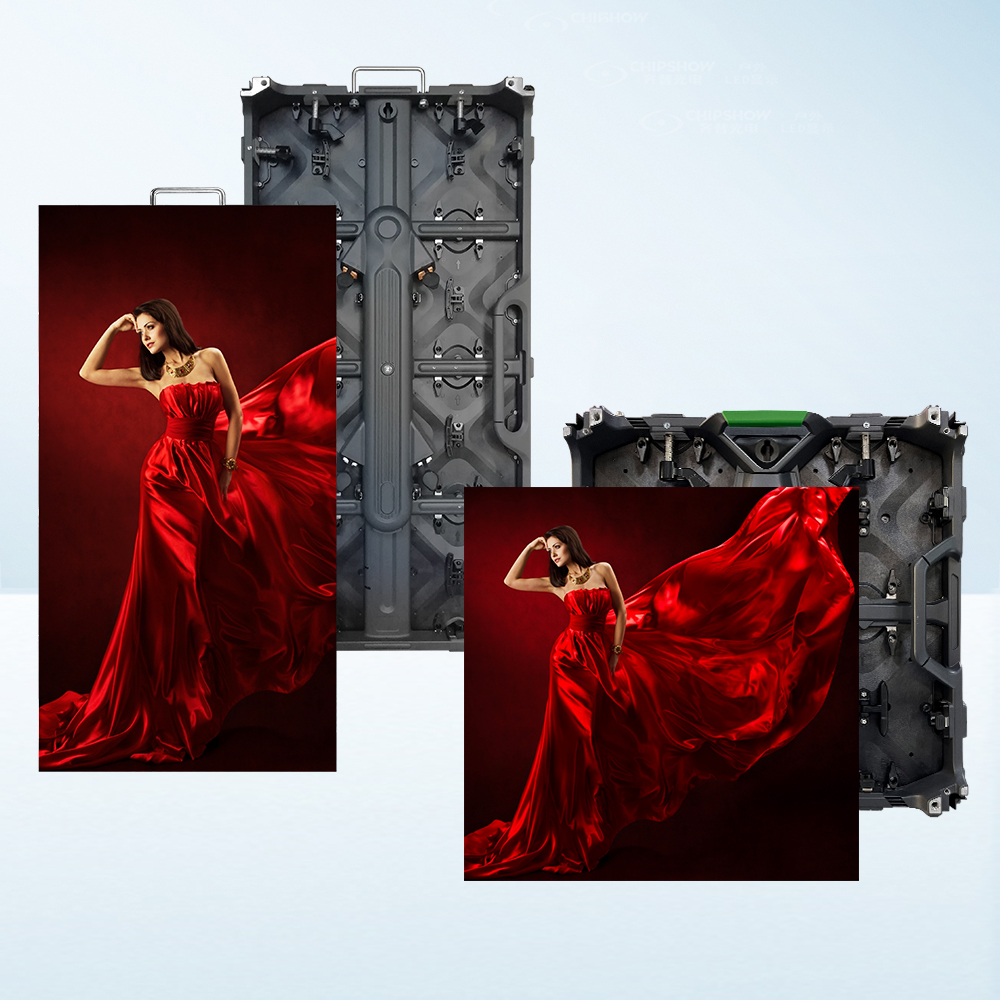
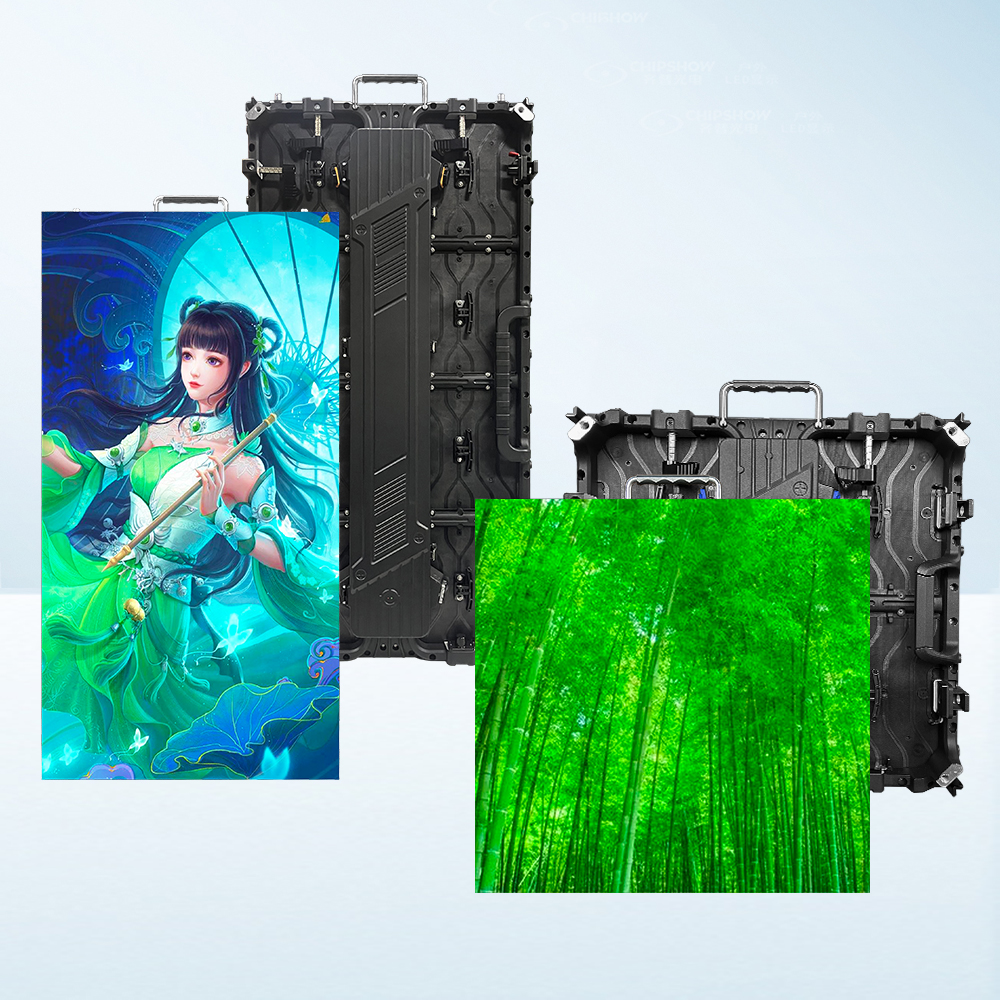
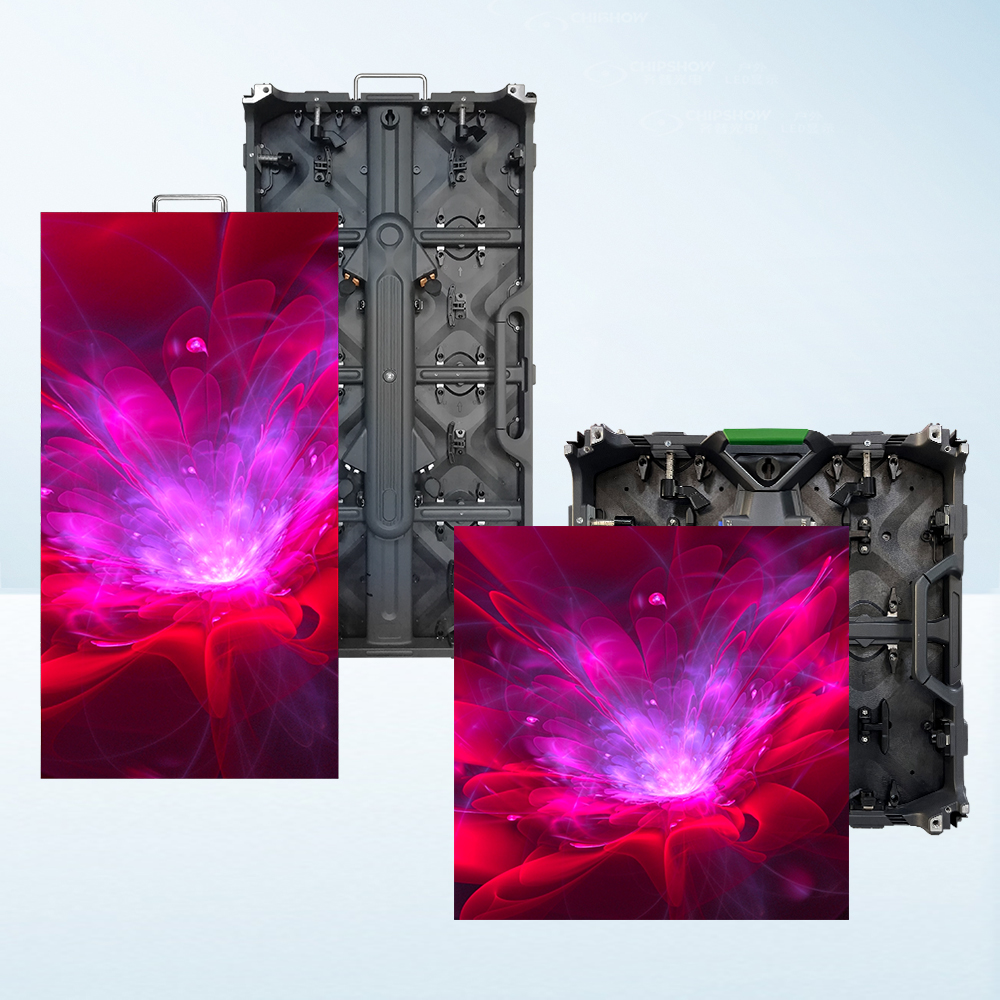
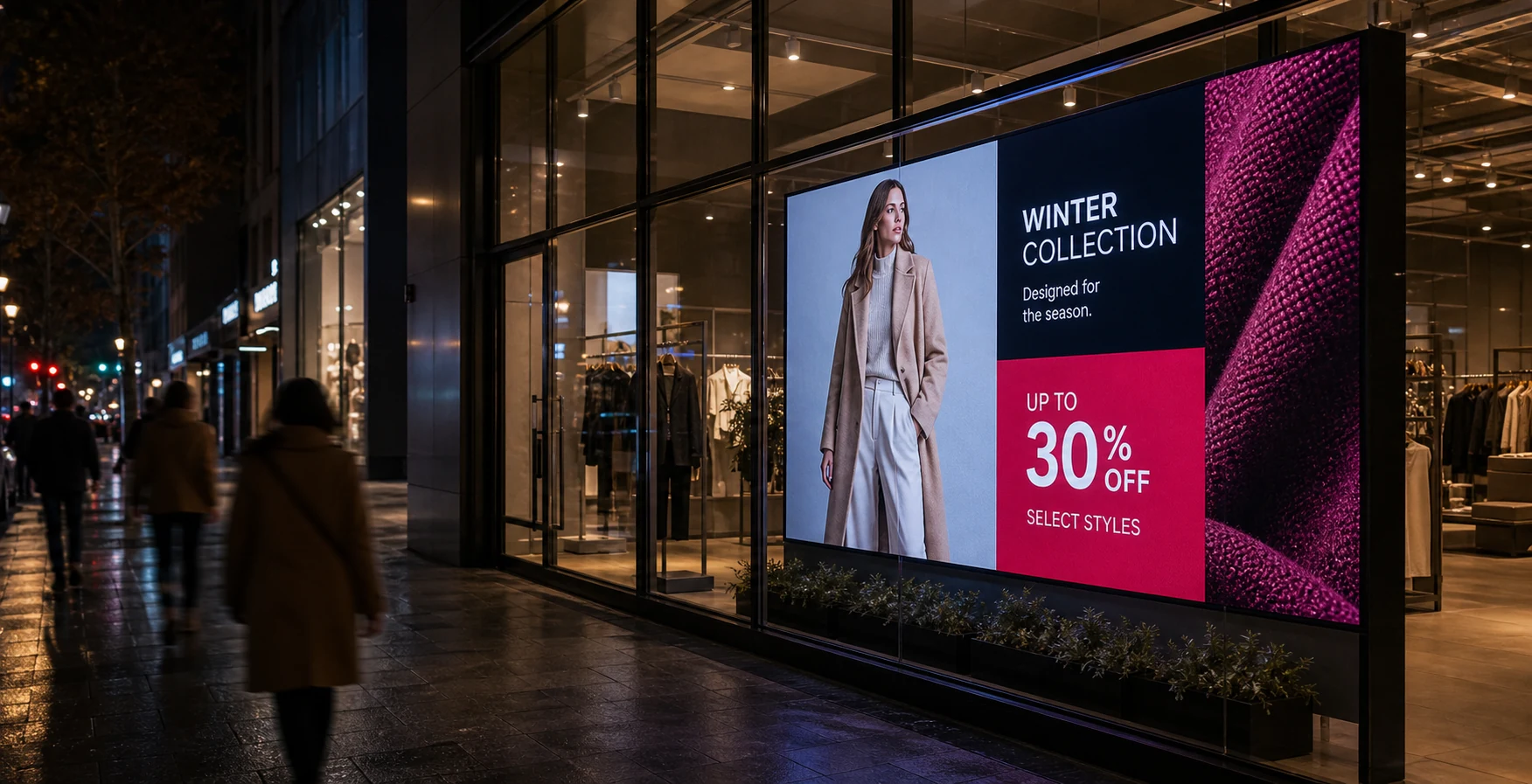 A window LED display can keep a storefront visible after business hours, as long as the content feels like real retail communication rather than random decoration.
The window is not closed when the door is closed
Retailers often think of LED displays as something that works during opening hours: announcing a sale, guiding people to a counter, showing a menu, or adding movement to a product wall. But a street-facing display has another job. It can hold attention when the sales team has gone home.
At night, the store window becomes a small stage. The product inside may be still, but the message can keep moving: a seasonal offer, a new arrival, a beauty campaign, a cafe menu, a service reminder, or a simple brand visual that tells people the store has not disappeared into the dark.
For HC Industry, this is where LED display planning becomes practical: not only asking what screen fits the wall, but what the screen should continue saying when no one is standing beside it.
A good window display has distance built into it
A customer does not read a shop window the way they read a product page. They read it while walking. They see it from across a corridor, from the curb, through reflections, or while passing another person. That changes the content strategy.
The strongest retail LED display content usually has a simple rhythm: one clear hero image, one short message, and enough movement to catch the eye without turning the window into visual noise. A screen can show a product detail, a price campaign, a menu panel, or a brand moment; it should not ask a passerby to stop and decode a crowded poster.
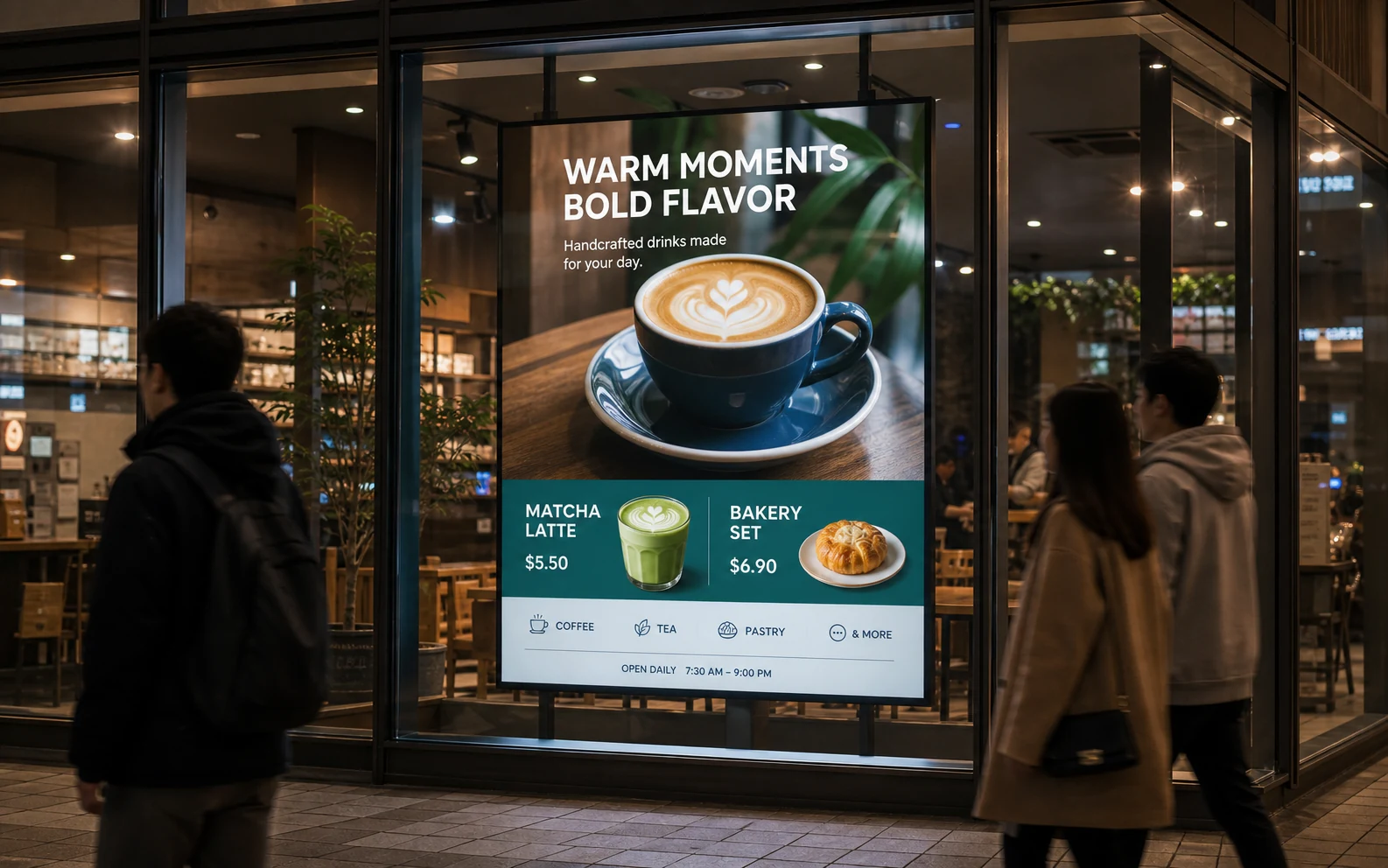 Night-window content should be readable from movement: large imagery, short copy, and a calm visual rhythm.
Brightness is only one part of visibility
A brighter screen is not automatically a better retail screen. The real question is whether the display remains comfortable, legible, and useful in its environment. A window facing a mall corridor has different pressure from a street window facing traffic. A cafe menu has different content needs from a cosmetics promotion or a sneaker launch.
This is why the early conversation should include viewing distance, glass reflection, operating hours, content type, and where people are expected to stand or pass by. The LED display becomes part of the storefront architecture, not a glowing object added at the end.
How far away will people first notice the display, and how close will they stand?
Glass, interior lighting, and the street behind the viewer all affect what the screen must overcome.
A campaign image, product launch, menu, or wayfinding message each needs a different visual pace.
The best screen content looks like it belongs to the store
A window display should not look like a screen demo. It should look like the store’s own voice. A beauty shop can show skin texture, product close-ups, clean campaign faces, and gentle seasonal offers. A cafe can show drinks, menu highlights, and warm evening promotions. A fashion store can use motion, fabric detail, lookbook images, and one clean call to return tomorrow.
That difference matters. When the content belongs to the business, the LED display stops feeling like equipment and starts feeling like part of the shopfront. It becomes a visual surface for the brand, not a bright rectangle competing with it.
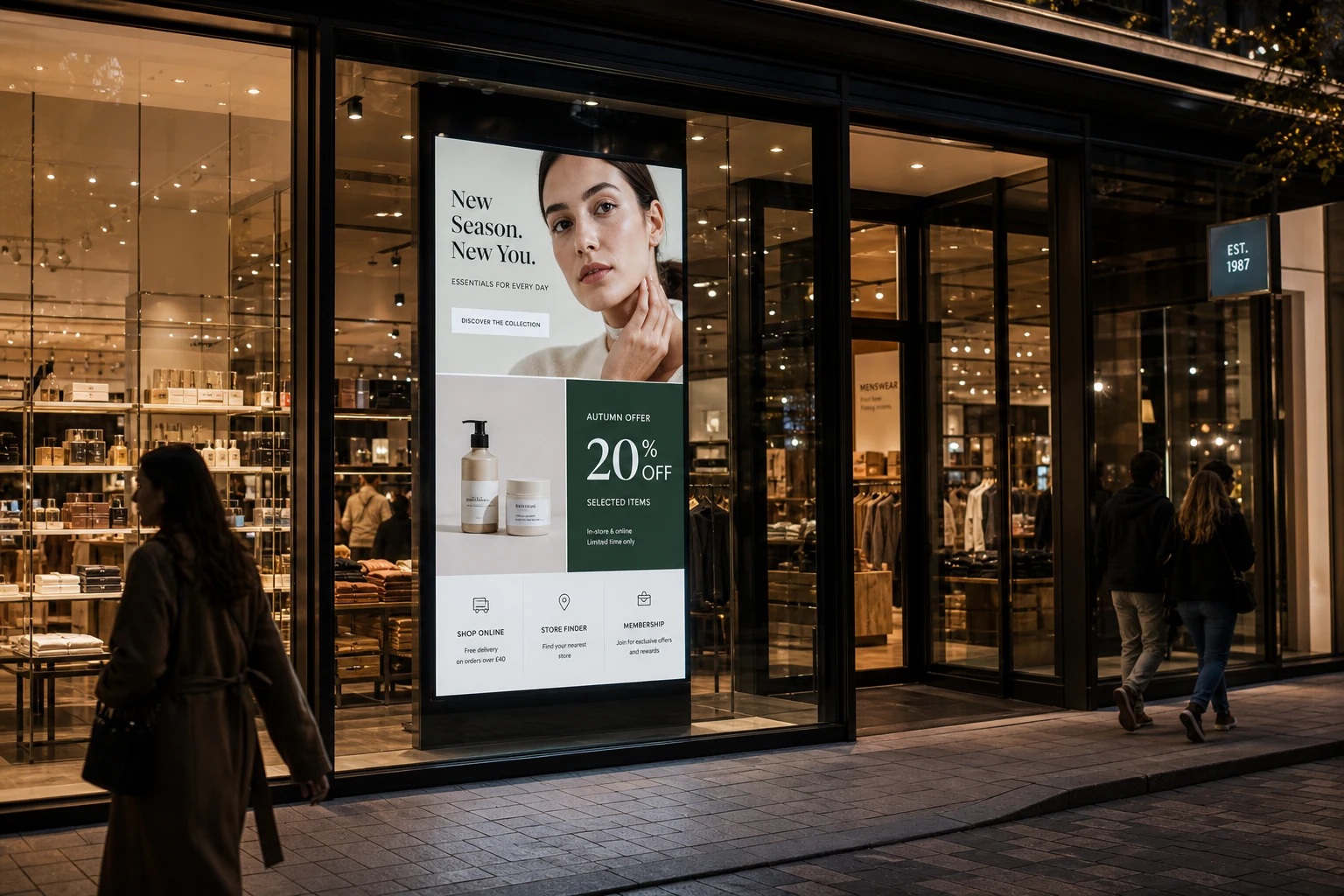 The screen should carry real brand content: products, offers, menu visuals, campaign images, or store information that belongs to the business.
What to plan before installing a retail window LED display
Before choosing the exact LED display direction, a retailer should write down the job of the window. Is it meant to attract from a distance, explain a product, promote a limited offer, replace printed posters, or keep the brand visible overnight?
That answer shapes the screen size, viewing distance, content format, placement, and maintenance expectation. It also helps avoid the common mistake of buying a display first and trying to invent a content strategy later.
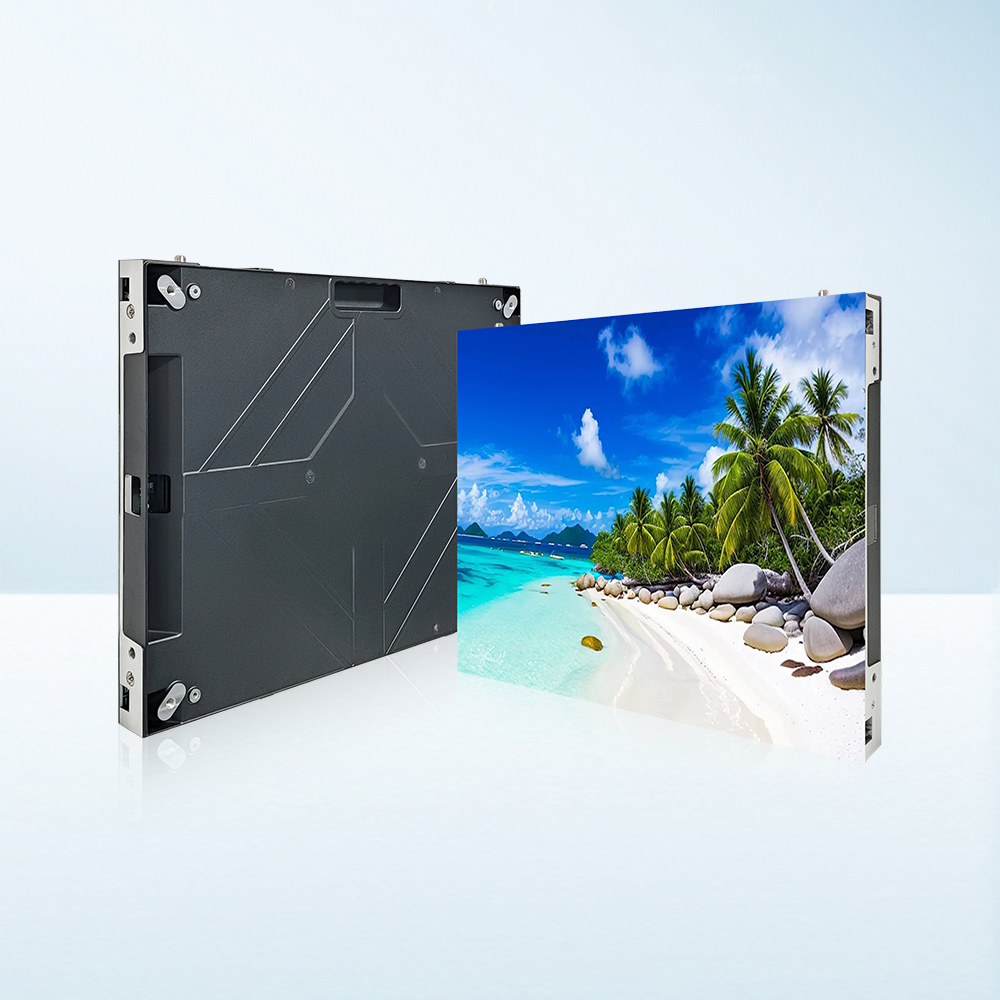
HC Industry can help match indoor LED display options to the store window, viewing distance, content plan, and installation environment, so the screen supports the shop rather than simply filling the glass.
Let the window keep working
A store window LED display is not just a screen for opening hours. With the right content and placement, it can keep the storefront alive after dark, help customers remember the brand, and turn quiet street time into visual attention.